
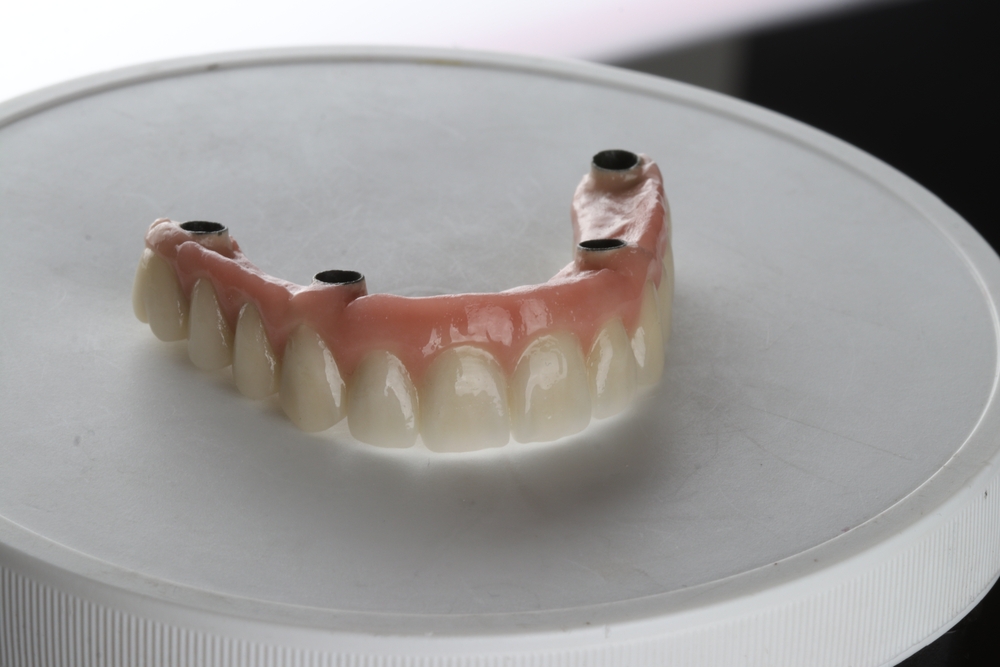
When an implant supported prosthesis doesn’t seat correctly, the problem isn’t just discomfort. Dentists call the correct seating standard passive fit. When that standard fails, two categories of damage follow: mechanical and biological.
Passive fit isn’t a vague description of looseness. It’s a defined clinical standard with measurable consequences when it’s missing. That applies whether the restoration is a fixed denture, a partial denture, or a full-arch fixed prosthesis.
This guide covers what passive fit means and why tooth and bone loss make it harder to achieve. It also covers how dentists identify and correct a poor fit before it causes lasting damage.
Key Takeaways
- Passive fit means the restoration rests on the implant without creating internal stress, and the absence of it has a clinical name.
- A gap at the implant connection lets bacteria in and generates micromovements that loosen screws, and research puts the acceptable misfit threshold at under 150 micrometers.
- Correction starts with X-ray detection and a provisional resin structure, not more torque, since forcing a misfit framework tighter accelerates the damage.
- Passive fit is measurable, and a dental professional can evaluate whether your restoration meets the clinical threshold.
- Common questions about fit symptoms, TMJ effects, night guards, and neighboring teeth are answered below.
When Dental Implants and Denture Stabilization Fall Short: What a Poor Fit Actually Means
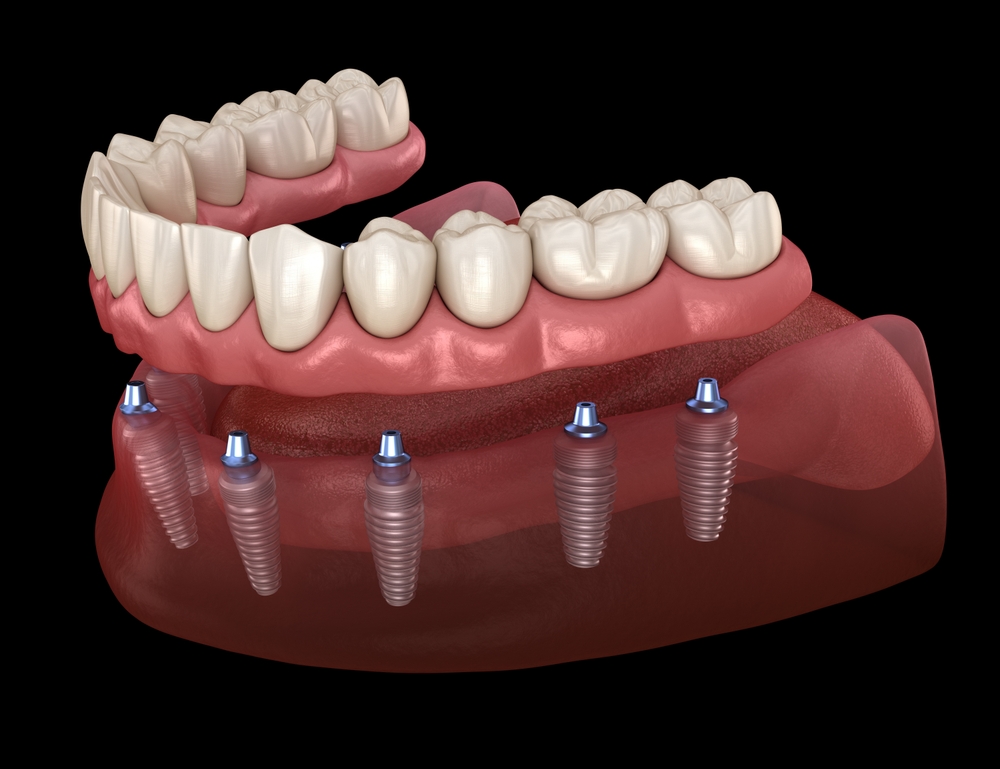
Dental implants support whatever restoration sits on top of them. That could be a fixed implant, an implant denture, or a full arch fixed prosthesis. Denture stabilization depends on that restoration fitting without gaps or stress. When the fit is off, dentists call it a lack of passive fit.
A passive fit means the restoration does not induce any tension on the implant. It also avoids tension on the surrounding bone when no external load is applied.
It simply rests in place. If the framework needs pressing or torquing into position, the fit is not passive.
What types of restorations are affected?
This standard applies to every implant-based restoration. Depending on how much natural tooth structure remains after tooth loss, patients may be candidates for:
- Implant-supported dentures or fixed bridges on implants
- Implant-retained dentures or denture-supported implants
- Implant overdentures, often chosen when traditional dentures or partial dentures no longer stay in place
- A single implant denture replacing one tooth, or dental bridges spanning several
Each depends on the same principle: the framework must seat without forcing the connection.
What goes wrong when passive fit fails?
Marginal misfit leads to two categories of complications. The mechanical category includes screw loosening, framework misfit, and loss of preload, plus abutment fracture.
The biological category includes bacterial colonization at the implant connection, crestal bone loss, and loss of osseointegration. Osseointegration is the bond holding the implant to the jawbone.
These two categories feed each other:
- A loose screw opens a gap
- Bacteria enter through that gap
- The resulting inflammation damages bone
- The damaged bone offers less support, so the screw loosens further
Patients often notice mechanical signs first: a restoration that rocks slightly, feels different when biting, or needs repeated tightening. Biological damage is less obvious early on, which is why those mechanical warning signs are worth taking seriously.
Implant placement precision also affects whether passive fit is achievable at all. When implants sit at angles that don’t match the planned prosthesis, the team may have to force the framework into position.
That forced seating is a passive fit failure. This holds regardless of how stable the restoration looks from the outside.
Passive Fit, Bone Loss, and the Oral Health Consequences of an Ill-Fitting Implant-Supported Prosthesis
Passive fit has a measurable threshold, and implant-supported prostheses that exceed it face two distinct types of harm. Understanding each mechanism explains why a small gap at the connection can cause damage that spreads well beyond it.
Two Ways an Ill-Fitting Prosthesis Damages Your Mouth
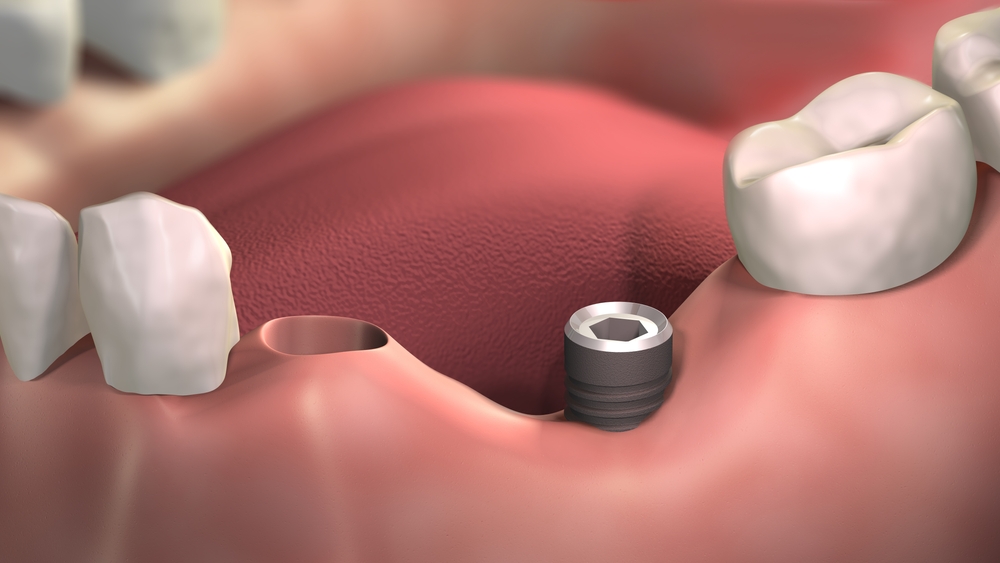
The biological mechanism. A gap at the implant connection creates a path for bacteria and/or their metabolic byproducts. That bacterial activity triggers inflammation, which leads to bone loss at the jawbone crest closest to the implant neck.
As bone density drops, the implant loses structural support. If the process continues, it can lose osseointegration entirely.
The mechanical mechanism. A dental prosthesis that doesn’t seat passively transmits chewing forces at the wrong angles. That mismatch creates constant micromovement at the connection.
Over time, this loosens the prosthetic screw. If it fractures, repair becomes more involved than a simple retightening.
Both mechanisms show up in ways patients can notice day to day:
- A restoration that’s harder to keep clean, since ordinary oral hygiene practices can’t reach bacteria trapped inside the connection
- Gum disease around an implant with active bone loss
- Reduced chewing efficiency
- Speech impediments if the restoration has shifted enough to affect soft tissue support
How is fit measured?
The clinical threshold for acceptable passive fit is a vertical misfit of less than 150 micrometers at the implant-restoration connection. Research on prosthetic screw stability confirms that misfits smaller than 150 μm were acceptable.
In that same research, passively fitting examples averaged 51 micrometers. Non-passive ones averaged 263 micrometers, a gap wide enough to matter clinically.
To put that number in context: 150 micrometers is thinner than two sheets of printer paper. You can’t see or feel it by hand.
That’s why practices rely on advanced diagnostic technology to measure it precisely. Jawbone density and tissue health around the implant matter here too. The stability of implant-supported fixed prostheses depends on staying below that threshold.
How Implant Dentistry Corrects a Misfit: Digital Impressions, CBCT Scans, and Prosthetic Rehabilitation
Implant dentistry follows a documented sequence when correcting a misfit. This kind of complex prosthetic rehabilitation doesn’t start with adjusting the existing framework.
It starts by confirming the problem, then rebuilding the structure correctly.
The Correction Protocol, Step by Step
- Detection through imaging. Dentists often reach for an X-ray first to catch a misfit. But it has a real blind spot. Research shows X-ray imaging can detect gaps as small as 70 μm. That means tighter gaps can go unnoticed on film. Once the dentist confirms a misfit, the response isn’t more torque. Tightening a screw on an ill-fitting framework forces the misfit rather than correcting it.
- A provisional resin-based structure. This temporary acrylic resin restoration lets the clinician check fit using intraoral radiographs and measured tightening torques. That check happens before committing to a final material.
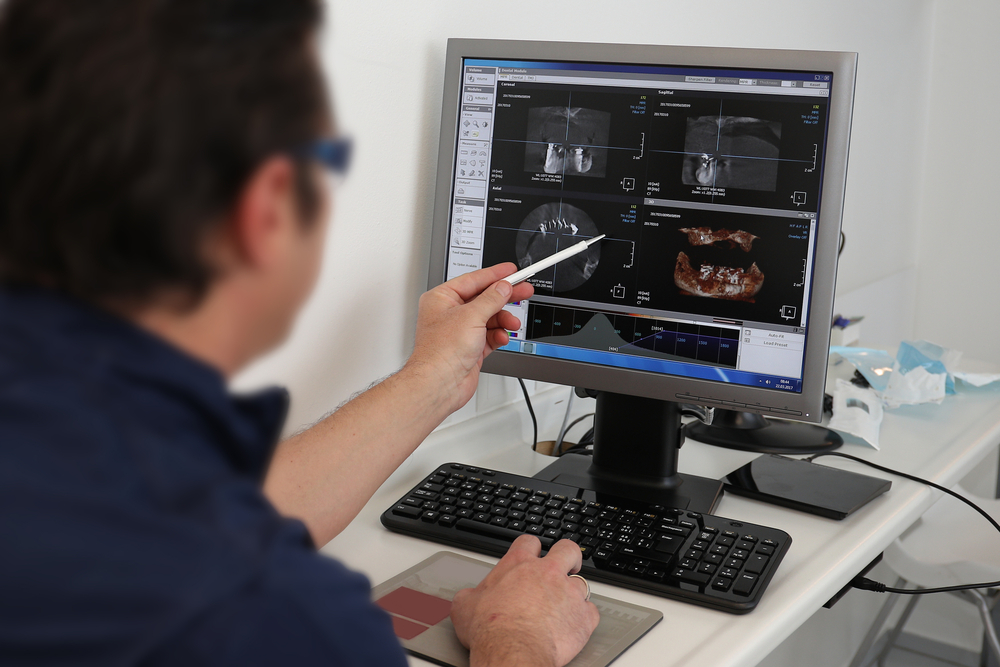
- CBCT and digital impressions. A CBCT scan produces three-dimensional imaging of the jaw and implant positions. A digital impression removes the distortion that traditional impression materials can introduce. That precision matters most in full-arch cases, where small errors multiply.
- Verification before final delivery. The dentist seats the framework intraorally and checks it for passive fit. It should seat without pressure, rocking, or force.
The Verification Step That Prevents Repeat Failures
The standard verification protocol uses a pattern resin index, built from the impression copings. This index checks master cast accuracy before the lab fabricates the framework.
Clinicians confirm this by checking the index intraorally to confirm the accuracy of the master cast. Implant positions recorded in the impression need to match the real positions in the mouth.
A few patient situations call for extra verification steps:
- Patients who’ve had bone grafting before implant surgery
- Patients still healing after oral surgery, since a healing denture worn during recovery can change tissue contours
- Implant-supported hybrid prosthesis and full arch fixed prosthesis cases, where the framework spans a larger area and small errors compound
- Cases involving graft infection or sinus perforation, where bone volume changes can shift implant positions enough to require a new impression
Acrylic resin frameworks used in provisional restorations are less rigid than metal or zirconia, so visual inspection alone isn’t enough. Measured torque values and radiographic confirmation at each stage give the clinician objective data to work from.
Is it time to recheck your implant supported prosthesis?
An implant supported prosthesis that stays comfortable and stable for years starts with getting the fit right from day one. Three signs are worth remembering: a restoration that rocks, feels different when you bite, or keeps needing retightening. Catching these early keeps a small mechanical issue from turning into bone loss that’s much harder to reverse.
At Tri-Cities Center for Cosmetic Dentistry, Dr. Kathy Sanders and Dr. Erika Lovett can examine your restoration and tell you exactly where it stands. Contact us today!
FAQs
Can a poorly fitting prosthesis damage my natural teeth or neighboring structures?
Yes, and the damage isn’t always where you’d expect it. Uneven bite forces from a misfit restoration can travel across the whole arch, straining teeth nowhere near the implant itself. Neighboring roots may also become inflamed if bone loss isn’t caught early. Regular checkups help your dentist catch these shifts before they affect teeth you’ve had your whole life.
How do I know if my implant prosthesis has a fit problem?
Your mouth usually gives you clues before a dentist ever sees an X-ray. Watch for a restoration that rocks slightly, a bite that suddenly feels uneven, or food that gets trapped in a spot it never used to. A widening gap at the gumline is another red flag. None of these symptoms confirm a diagnosis on their own, but together they’re a good reason to schedule a check.
Does a misfit prosthesis increase my risk of a TMJ disorder or Temporomandibular Disorder?
It can, since your jaw joints are sensitive to how bite forces are distributed across your teeth. A misfit restoration often shifts that distribution, and over time that strain can contribute to Temporomandibular Disorder symptoms like clicking, soreness, or stiffness. TMJ disorder rarely has just one cause, so a dentist will look at your whole bite, not only the implant, before diagnosing it.
Should I wear a night guard if I have an implant prosthesis?
Many patients with implant restorations are advised to wear a night guard, especially if they grind or clench their teeth during sleep. Grinding generates forces well beyond normal chewing, and those forces can loosen prosthetic screws faster than daily use alone. A night guard acts as a buffer, spreading that pressure more evenly across your bite. Ask your dentist whether a custom guard fits your restoration and grinding pattern.
How long does the correction process take once a misfit is identified?
The timeline depends on how far the problem has progressed before it’s caught. A straightforward case, caught early, might only need a new provisional structure and a few verification visits over several weeks. Cases involving new impressions, a full framework rebuild, or additional bone healing time can stretch into a few months. Your dentist can give you a more specific estimate once imaging confirms the extent of the misfit.