

Porcelain veneers before and after photos show impressive results, but they hide the clinical decisions that produced them. A consultation is where you learn whether a specific plan fits your teeth, your bite, and your long-term oral health.
The four questions below give you a framework for making that appointment count. Each one targets a decision your dentist makes before, during, or after treatment.
Key Takeaways
- Enamel removal is permanent, so ask how much your case actually needs.
- Enamel-only bonding tends to outlast veneers bonded into dentin.
- Chipping from grinding is the leading reason veneers fail.
- Gum irritation after placement is common, so ask about the follow-up schedule.
- These four questions turn a consultation into real treatment planning.
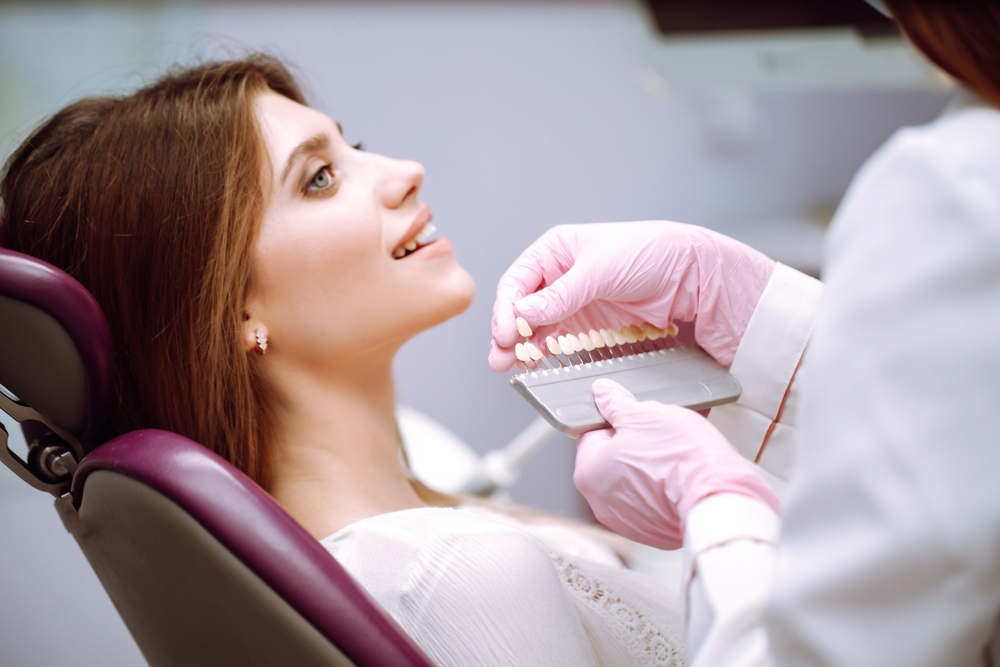
Question 1: How much enamel will be removed?
Dental veneers are thin shells bonded to the front of a tooth. Most cases call for removing a layer of tooth enamel first to make room for the shell.
Why Enamel Removal Is Permanent
Tooth enamel doesn’t grow back once it’s gone, so this step can’t be undone. Research supports a conservative approach: minimal/no preparation veneers have the highest survival rate. A separate analysis found that long-term outcomes worsen when veneer preparations extend into dentin, which is why many dentists aim to stay within enamel whenever possible.
Is a minimally invasive option right for you?
Not everyone qualifies for a reduced-preparation approach, but it’s worth asking about. You may be a good candidate for minimal or no-prep veneers if you:
- Have enough natural enamel remaining on the teeth being treated
- Are dealing with mild discoloration rather than deep, permanent stains
- Have minor irregular teeth or small spacing issues, not major misalignment
- Only need to lengthen teeth slightly, rather than reshape them completely
Veneers can close small gaps, adjust tooth shape, or cover stains that resist whitening. A single rotated tooth needs far less preparation than a full smile makeover.
Questions to Ask Before Any Enamel Is Removed
- How much tooth enamel does my specific case require?
- Would a minimal preparation restorative technique work for my goals?
- What material are you planning to use, and why?
Share your goals clearly before treatment starts. That helps your dentist plan the least invasive option that still gets you the result you want.
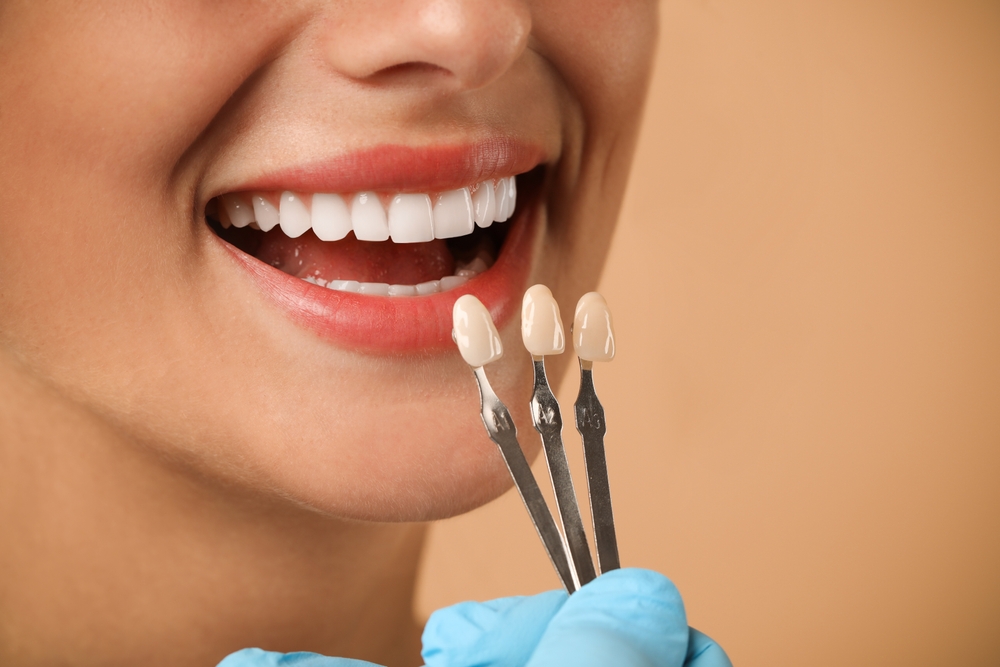
Question 2: How will my shade be verified?
Shade matching blends color science with clinical judgment. Veneer color shifts under different light sources. A shade that looks right under a dental light can look different in daylight or office lighting.
Why a Full Set of Veneers Needs Extra Precision
A single veneer only needs to match the adjacent tooth. A full set has no natural neighbor to match against, so the shade decision carries more weight. This matters most for stains that resist whitening, such as tetracycline stains. Veneers can mask these stains in ways whitening alone cannot.
What the Try-In Step Should Confirm
Most practices use a trial placement, called a try-in, to preview the shade before permanent cementation. One study on try-in pastes found that color can shift once resin cement cures. Researchers cautioned that clinicians should not count on try-in pastes alone for the final color decision.
Ask what your dental team checks during this step:
- Which latest techniques they use for trial placement, such as digital shade mapping or in-mouth try-in pastes
- How the shade looks in natural light, not just under the dental chair light
- How many shade checks happen before final bonding
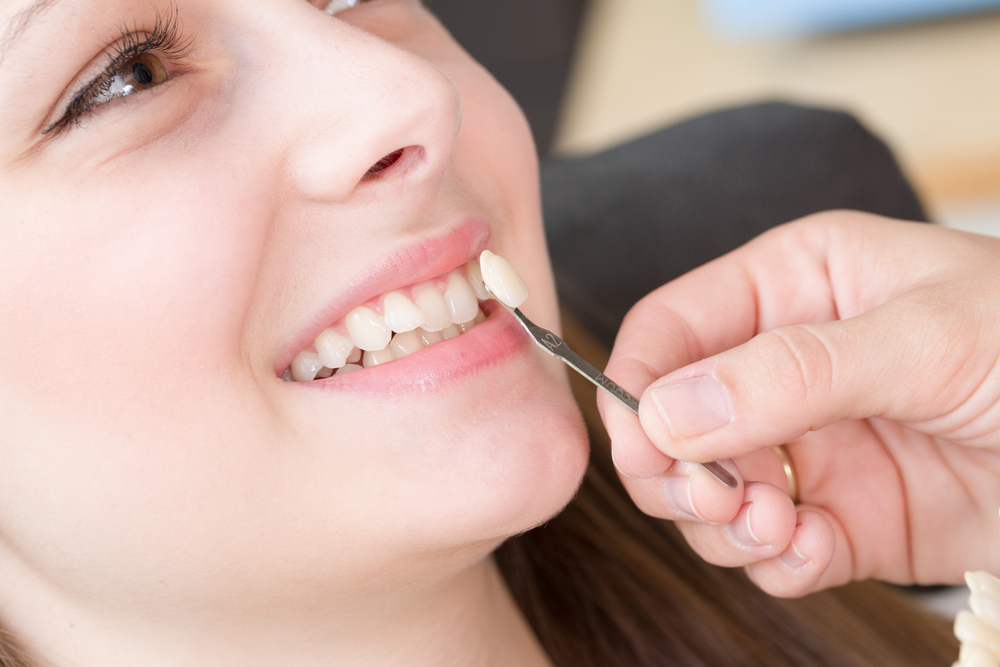
Question 3: What does the survival data show?
The bonding process matters as much as the shade. A curing light hardens the resin that attaches the veneer to the tooth. How well that bond holds depends on what it’s bonding to.
What the Numbers Show
A few key figures are worth bringing up at your consultation:
- A retrospective review of 672 veneers over 15 years found that the cumulative 15-year estimated survival rate was 96%
- Enamel-only bonding reached 96.7% survival, compared with 93.9% when more dentin was exposed
- A separate 20-year prospective study identified chipping and cracking in stress-bearing areas as the leading cause of failure
When Grinding Changes the Plan
That chipping finding matters most if you grind your teeth. Chronic grinding repeatedly stresses the same contact points on a veneer’s surface. Ask your dental team what material they recommend and whether a night guard should be part of your plan.
When Whitening Might Be the Better Fit
Veneers aren’t a substitute for whitening when discoloration is the only concern. Patients who want a lighter tooth color without changing tooth shape may find that tooth whitening is the simpler path.
Practices that offer both veneers and restorative dentistry can help you compare options before you commit.
Question 4: What does follow-up look like after placement?
Gum and tooth health have to be stable before veneers go on. Your dental team should check periodontal health and resolve any problems first.
What to Ask About Gum Health First
Before any veneer is placed, ask whether you have:
- Active gum disease or inflammation
- Inconsistent oral hygiene habits that need addressing first
- Any signs that your gum tissue needs treatment before bonding
What Happens to Gum Tissue After Placement
Soft tissue changes after placement also deserve attention. A survey found that the most common problem reported by respondents was hyperplasia. This gum tissue overgrowth around the restoration affected roughly six in ten patients surveyed. Patients without this issue reported noticeably higher satisfaction with their results.
What a Good Follow-Up Schedule Includes
That’s not a reason to avoid veneers. It’s a reason to ask what your dental team monitors after placement. One clinical case study documented a postoperative evaluation 4 weeks later. That routine recall checked function, healing, and appearance together. Ask whether your plan includes something similar.
What Oral Hygiene and Daily Habits Affect After Placement
Oral hygiene after placement follows the same basics as before treatment:
- Brush twice daily and floss around the veneer margins
- Keep up with dental cleanings between visits to catch problems early
- Limit tooth-staining beverages like coffee, tea, and red wine
- Avoid tobacco products, which speed up discoloration and raise gum disease risk
Veneers don’t decay, but the tooth structure underneath still can. Ask your dental team what your follow-up schedule should catch early.
Turn These Questions Into Your Porcelain Veneers Before and After Success
Porcelain veneers before and after results only make sense once you understand the choices behind them. Enamel removal, shade verification, survival data, and follow-up care each shape how your smile holds up over time. Walking into your consultation with these four questions puts you in control of that plan from day one.
Bring this list to Tri-Cities Center for Cosmetic Dentistry, and Dr. Kathy Sanders and Dr. Erika Lovett will walk you through exactly how each question applies to your smile. Contact our team to set up a time that works for you.
FAQs
How long do porcelain veneers typically last?
Most patients get many years of use from porcelain veneers when they’re well cared for, though the exact number depends on your habits and how the veneers were placed. Regular checkups let your dentist catch small issues, like a loose edge or minor wear, before they become bigger problems. Good home care and avoiding hard bites go a long way toward protecting your investment.
Can veneers stain over time?
Porcelain itself holds up well against stains because of its smooth, glass-like surface, unlike natural tooth enamel. The tiny seam where a veneer meets your natural tooth can pick up some color over the years, especially without consistent care. Routine polishing during dental visits keeps that seam looking fresh and helps your veneers blend seamlessly with the rest of your smile.
Are veneers reversible?
Once your dentist removes enamel to place a veneer, that change is permanent, since enamel doesn’t grow back on its own. This means committing to veneers is a long-term decision, not something to undo later if you change your mind about the look. Some patients with minimal enamel loss can explore removable alternatives instead, but true prepared veneers stay in place for good.
Who is a good candidate for veneers?
Good candidates usually have healthy gums, enough remaining enamel, and teeth free of active decay before starting treatment. People hoping to fix minor chips, gaps, or discoloration tend to see the best results with veneers alone. If you clench or grind heavily at night, your dentist may recommend extra protection like a night guard alongside your new smile. A short consultation is the easiest way to know for sure.
What causes veneer failure?
Veneers usually fail for one of a few reasons: physical stress from grinding, a poor bond during placement, or ongoing gum problems that weren’t treated first. Choosing a skilled cosmetic dentist lowers these risks significantly, since proper case selection and careful bonding technique matter as much as the material itself. Regular cleanings and checkups also help catch small problems early, before they require bigger repairs.
Citation/Sources
- https://pmc.ncbi.nlm.nih.gov/articles/PMC11122289/
- https://pmc.ncbi.nlm.nih.gov/articles/PMC8911512/
- https://pmc.ncbi.nlm.nih.gov/articles/PMC6571517/
- https://pmc.ncbi.nlm.nih.gov/articles/PMC12618969/
- https://pmc.ncbi.nlm.nih.gov/articles/PMC8898222/
- https://www.ncbi.nlm.nih.gov/pmc/articles/PMC9671196/
- https://pmc.ncbi.nlm.nih.gov/articles/PMC7981692/