
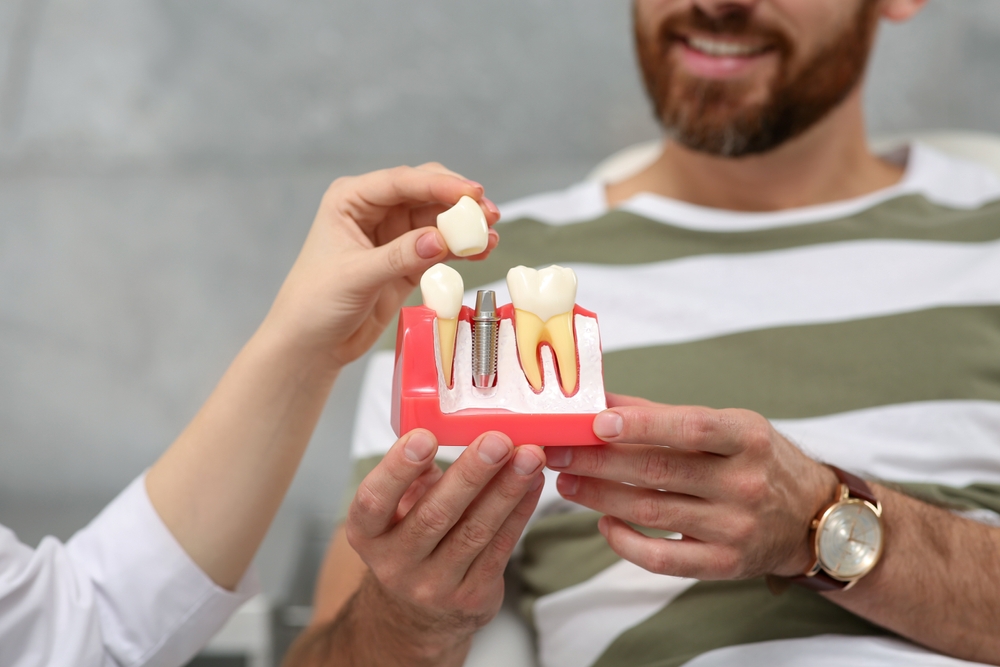
An implant crown is not the same thing as a dental implant. Many patients use the two terms interchangeably, which adds to the confusion.
The implant is a titanium post placed into your jawbone. The crown is the visible, tooth-shaped cap that attaches to that post later, once your jaw has fully healed.
This kind of dental procedure unfolds in stages, not all at once. That’s exactly why the timeline can feel confusing. It’s a tooth replacement process built around biology, not a single office visit. Understanding what each part does makes conversations with your dental team much easier when healing and next steps come up.
Key Takeaways
- An implant is a titanium post placed inside the jawbone.
- The crown is the visible cap attached to that post later.
- Full healing typically takes 3 to 8 months before a crown goes on.
- Bone density and implant stability determine your exact timeline.
- Some patients qualify for a crown within 48 hours of surgery.
Two Parts, One Tooth: What a Dental Crown and Dental Implant Actually Are
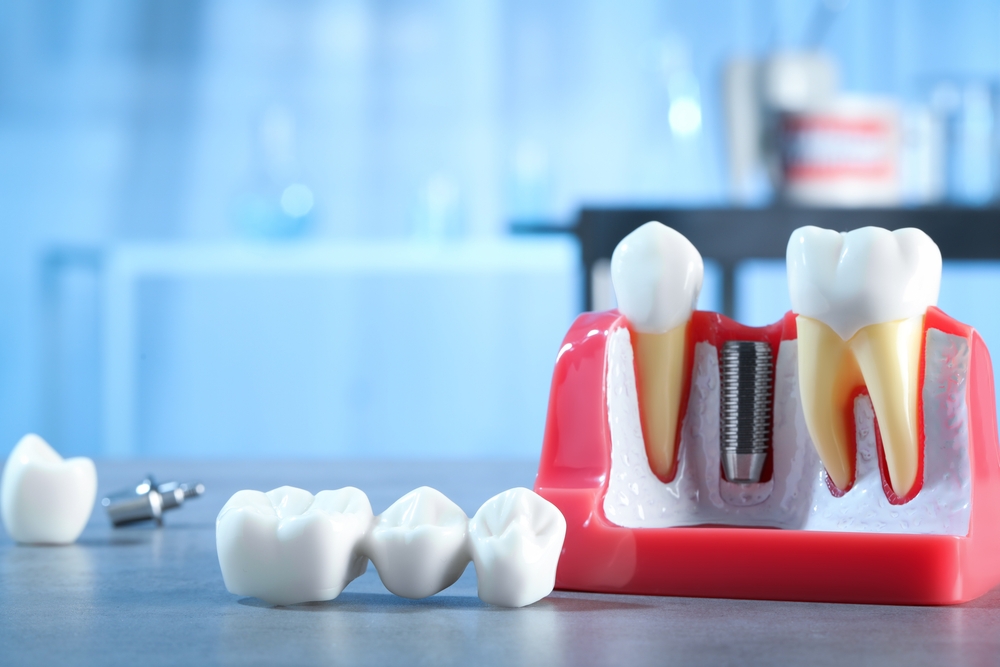
A dental crown and a dental implant serve two separate roles in the same treatment. Each piece has its own job, and each goes in at a different stage.
Titanium Post vs. Porcelain Crown: A Quick Comparison
- The implant: a titanium post placed inside the jawbone, replacing the natural tooth’s root structure
- The crown: a porcelain, tooth-shaped restoration attached to the post after healing
- Visibility: the post stays hidden below the gum; the crown is what you see and chew with
- Timing: the post goes in first, the crown follows months later
Most confusion comes from treating these two parts as one single step. Patients often ask why their implant looks unfinished, or why their new tooth still isn’t ready. The post is already in place, but the crown hasn’t been attached yet. That’s expected, not a setback.
What does the implant look like before the crown?
The provider’s approach determines what’s visible at the gum line during healing. The traditional protocol relies on a two-stage surgery with a submerged healing period. The implant stays fully covered until a short follow-up procedure exposes it.
A one-stage method instead uses a small metal post, sometimes called a healing cap. It sits above the gum to hold its shape while the bone fuses underneath.
Neither appearance means anything went wrong. This waiting period is also what separates implant-supported restorations from traditional crowns. Crowns used to repair damaged teeth, or a crown used in a dental bridge, don’t need this healing time. That’s because it doesn’t involve a surgically placed post.
Restorative dentistry built around a titanium post requires the bone to grow around it first. You can’t rush that biological step.

The Surgical Process: How the Implant Post Supports a Porcelain Crown
A natural tooth stays anchored through its root structure inside the jawbone. When you lose a tooth, that root disappears too, and the implant post replaces it.
What Happens During Osseointegration
Once your provider places the post, your body grows new bone tissue around it in a process called osseointegration. Without it, the post has no stable foundation, and a crown placed too soon would sit on an unstable surface.
Traditionally, implants are kept load-free for 3 to 8 months while the bone fuses around the post. Chewing forces matter here too. Chewing creates micromotions of less than 0.1 mm at the point where the implant post meets the jawbone. Fusion can’t finish properly if those movements happen too early.
Why Bone and Gum Health Matter
This is also why jawbone health and gum health get checked before surgery:
- Bone loss at the site may require a graft before placement
- Gum tissue needs to be infection-free so healing stays on track
- Bone preservation directly affects whether the post fuses correctly
- Missing teeth left unreplaced for years often mean lower bone density at the site
Your provider shapes the custom crown to match your natural teeth in size, shape, and color. It isn’t attached until your provider confirms osseointegration is complete. That confirmation is what turns the restoration into a long-term solution rather than a quick fix.
How to Support Healing After Surgery
A few habits make a real difference in how predictably the implant integrates:
- Stick to a soft-food diet as recommended
- Practice good oral hygiene around the healing site without disturbing it
- Avoid smoking or vaping near the surgical area
- Keep every follow-up appointment on schedule
- Continue consistent dental care at home between visits
Mild soreness and swelling after surgery are normal and usually fade within a week with over-the-counter pain relief.
Treatment Planning and Bone Density: Why the Timeline Varies by Dental Patient
Two dental patients can get implants on the same day. They can still wait very different lengths of time for their crowns. That difference comes down to three factors checked during treatment planning.
The Three Factors That Affect Your Timeline
- Bone density: denser bone fuses faster; the upper jaw often needs more healing time than the lower jaw
- Implant stability: a post that’s firmly anchored right after placement can shorten the wait before a crown goes on
- Extraction status: a freshly extracted site is still changing, while a fully healed site gives the post a more stable start
Your provider also reviews your overall oral health and any grafting needs before finalizing your specific timeline. No two treatment plans look exactly alike, even for the same procedure.
When is an implant-supported crown placed immediately?
An implant-supported crown can go on within 48 hours of surgery if primary stability is high. Site conditions must also line up. This isn’t an option for every patient.
Early loading generally happens between 2 days and 3 months after surgery. In the right cases, it has shown comparable or even better survival rates than traditional delayed loading.
A randomized trial found 100% implant survival in both groups at the 12-month follow-up. This held regardless of whether implants were loaded within 48 hours or after 3 months. Case selection is the deciding factor, not a shortcut.
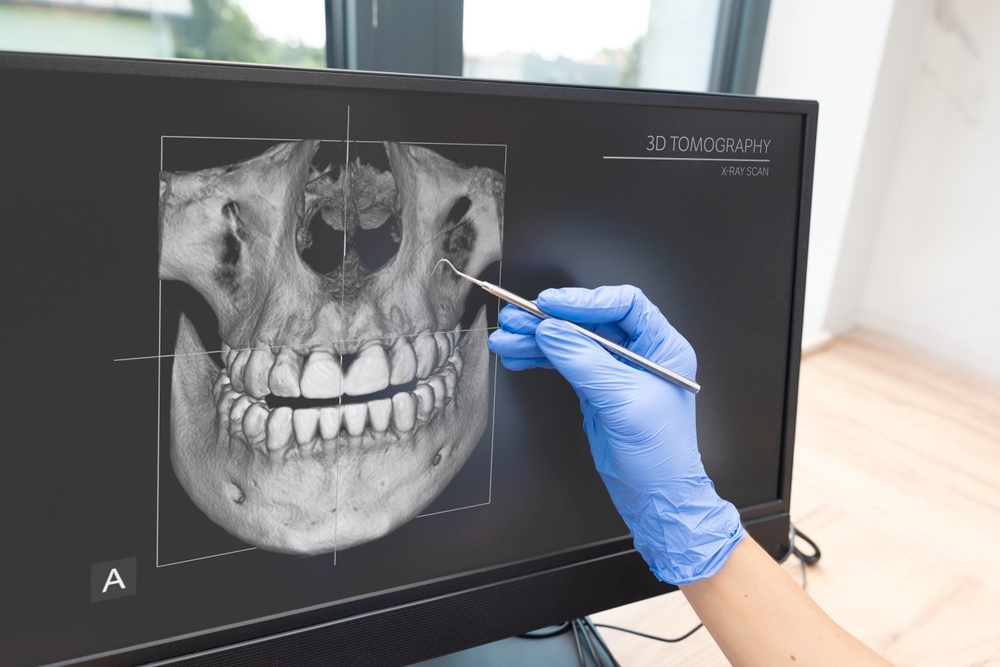
Your dental evaluation includes dental X-ray imaging and a review of bone volume. This gives your provider the data needed to choose the right protocol.
Curious about your own implant crown timeline?
Your implant crown timeline depends on three things a mirror can’t tell you. Those are bone density, implant stability, and whether your site is fully healed.
At Tri-Cities Center for Cosmetic Dentistry, Dr. Kathy Sanders and Dr. Erika Lovett map out your exact timeline first. They use 3D imaging before treatment ever begins, so you’re never guessing about your own healing progress. Every patient’s bone and gum health looks a little different. That’s exactly why a personalized evaluation matters more than a general timeline.
Have questions about your own case? Reach out to our team!
FAQs
How long can you have an implant without a crown?
Most patients wait three to eight months before their crown is placed, though your provider will schedule check-in visits to monitor healing. Some use a temporary partial or flipper tooth during this stage so their smile still looks complete. This isn’t a sign anything is wrong. It’s simply how bone integration works, and rushing it can increase the risk of implant failure.
How much does an implant crown cost?
Every case is priced differently based on your specific needs, so there’s no single number that applies to everyone. Many practices offer financing plans that break the total cost into manageable monthly payments. Dental insurance may cover part of the treatment, especially if a missing tooth affects your bite or oral health. A one-on-one consultation gives you the clearest cost estimate for your specific case.
What does a dental implant look like before the crown?
Most people won’t notice anything different when you smile, since the healing implant sits below or at the gum line and is out of view. If you’re self-conscious about a gap, ask your provider about a temporary crown or removable retainer for the healing period. Many patients forget they’re even mid-treatment once the site settles and stops feeling tender. Regular brushing and gentle rinsing keep the area healthy while you wait.
Can a loose implant crown be tightened?
A loose crown usually means the screw or cement holding it has worn down over time, not that the implant itself has failed. Avoid chewing on that side until your provider examines it, since extra pressure can cause further damage. Most fixes are quick, in-office adjustments that don’t require additional surgery. Waiting too long, though, can lead to bigger problems.
How is a crown attached to a dental implant?
Screw-retained crowns are easier for your dentist to remove later for adjustments or repairs, which many providers prefer for long-term maintenance. Cement-retained crowns tend to look slightly more natural since there’s no visible screw access hole. Your provider chooses based on the implant’s location, your bite, and how much value you place on future adjustability. Both options are considered equally durable when properly maintained.