
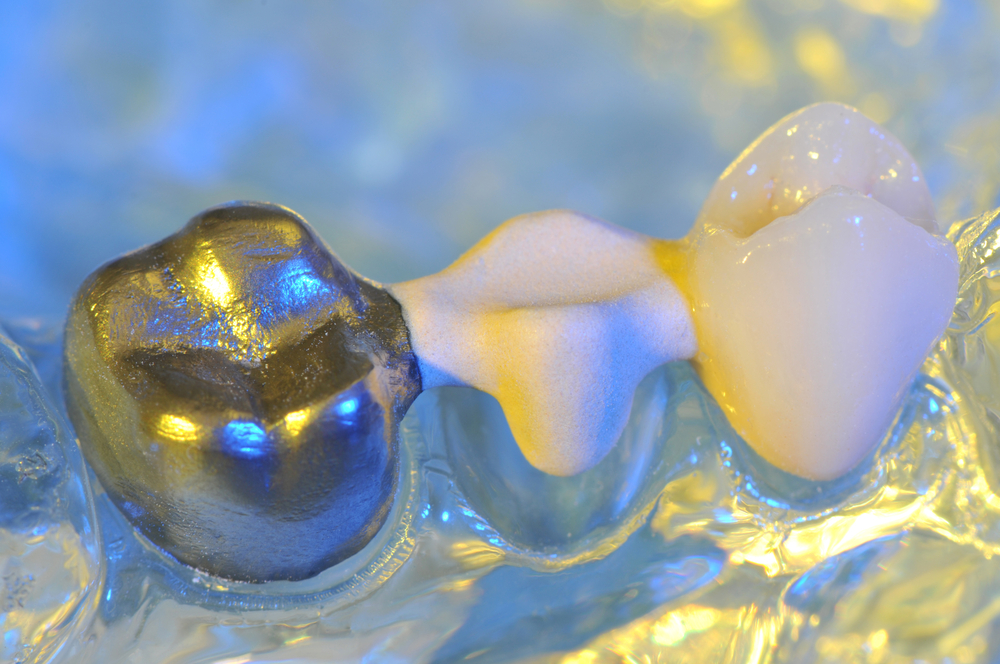
Dental inlays and onlays repair a damaged or decayed tooth when a filling won’t hold. You may not need a full crown yet, either. A dental laboratory builds these indirect fillings from gold, porcelain, or composite resin, and each material handles daily wear differently. One lasts for decades, one blends with your smile, and one costs less and repairs faster. Here’s how the three actually compare, material by material.
Key Takeaways
- Gold offers the longest proven survival record of any inlay or onlay material.
- Porcelain matches gold’s survival numbers at 24.8 years but fractures more often.
- Composite resin is the most repairable and budget-friendly option.
- Your choice depends on the tooth’s location, damage, and priorities.
- Common questions about inlays and onlays are answered below.
Gold: The Longevity Benchmark for Dental Inlays and Onlays
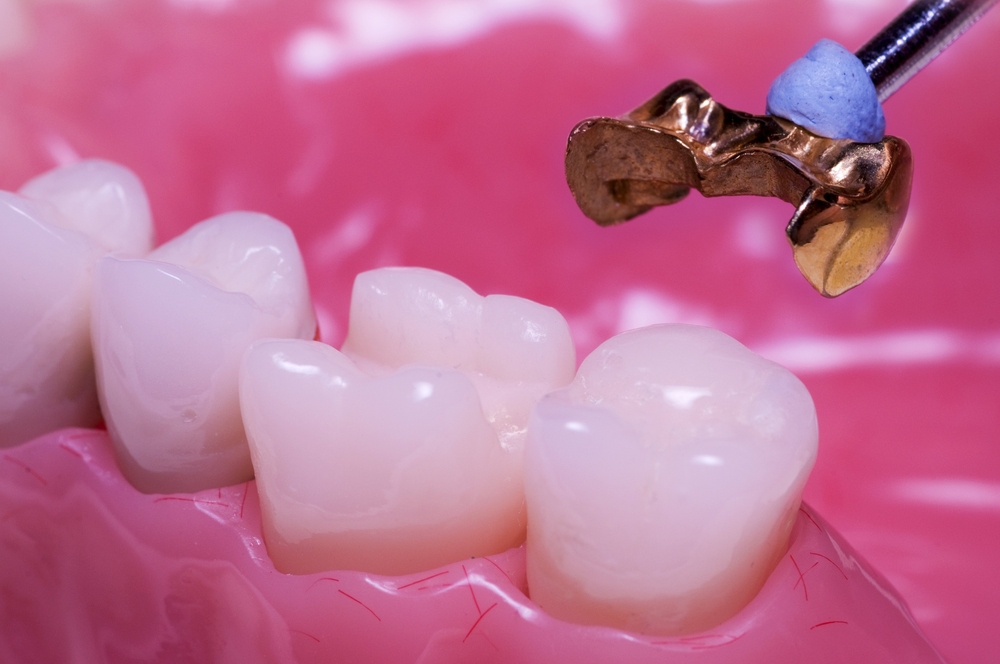
Dentists have used gold in restorative dentistry longer than porcelain or composite. Research shows it helps prevent tooth structure loss.
It sits within the cusps of the tooth or extends across them like small partial crowns. That offers more protection than standard dental fillings, without the full coverage of dental crowns.
Why Gold Restorations Last the Longest
Gold ranks first for longevity, and the research backs it directly. Studies on root-filled teeth found gold restorations, including onlays, very high survival rates at 30 years regardless of design. That window outlasts any comparable data for ceramic or composite material.
Gold resists pressure on the chewing surface without cracking, and it fits tightly against tooth margins. That tight seal limits the gaps where new dental decay can enter.
It also adds real tooth strength to a weakened tooth. Catching that decay early matters too. Routine preventative care keeps mild damage from becoming a problem that needs an inlay or onlay.
The Aesthetic Trade-Off
Gold shows when you smile, and for many patients, that rules out any visible tooth. On a back molar that stays hidden, gold remains a smart pick for dental work.
For visible teeth, most patients turn instead to cosmetic dentistry options built around appearance. Blending in often matters more than raw durability once a tooth is front and center.
Gold at a glance:
- Longest documented survival window of the three materials
- Excellent resistance to chewing forces and cracking
- Shows on the tooth, unlike tooth-colored composite or porcelain
- Best suited for molars, not front teeth
- More similar to older metal fillings than to tooth-colored options
Porcelain: The Balanced Choice for Long-Term Dental Restorations
Porcelain sits between gold and composite on the longevity scale, and most patients choose it first.
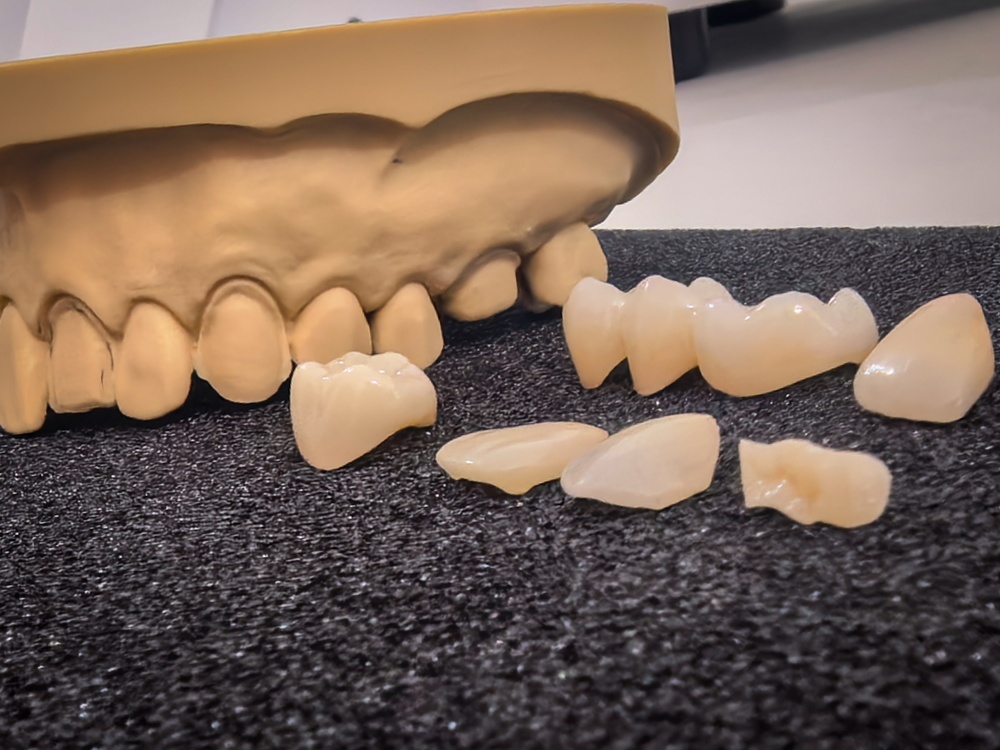
It replaces enamel on the chewing surfaces of back teeth. It blends in far better than metal while holding up under daily occlusal forces.
How Porcelain Performs Over Time
Porcelain’s popularity often starts with how closely it matches a smile. That same quality drives patients toward porcelain veneers for front-tooth work.
A broader look at inlay success rates and longevity covers an 8- to 10-year service window. Individual studies in that window reported survival rates well into the low 90s.
Porcelain vs. Gold: A Long-Term Comparison
The comparison with gold gets more specific over decades of use. One study tracking restorations over time found both materials achieved high survival rates up to 24.8 years. That puts them close together in the medium term.
Where Ceramic and Gold Part Ways
The gap between them shows up in how each material fails. Ceramic fractures more often in comparative studies, while gold rarely cracks since there’s no brittle material to chip.
That difference matters most for patients dealing with TMJ and teeth grinding. Added nighttime pressure raises the odds of a ceramic fracture.
When ceramic fractures, the restoration usually needs full replacement rather than a quick repair. For patients managing several damaged teeth at once, complex dental cases often need a mix of materials. One blanket choice rarely fits every tooth.
Porcelain at a glance:
- Blends closely with natural teeth and surrounding tooth enamel
- Performs nearly as well as gold at the 24-year mark
- Higher fracture risk than gold, especially for teeth grinders
- Requires full replacement, not a simple patch, if it cracks
- A strong middle ground between gold and composite
Composite Resin: The Repairable, Budget-Friendly Option
Composite resin ranks third for longevity, but that ranking doesn’t tell the whole story.
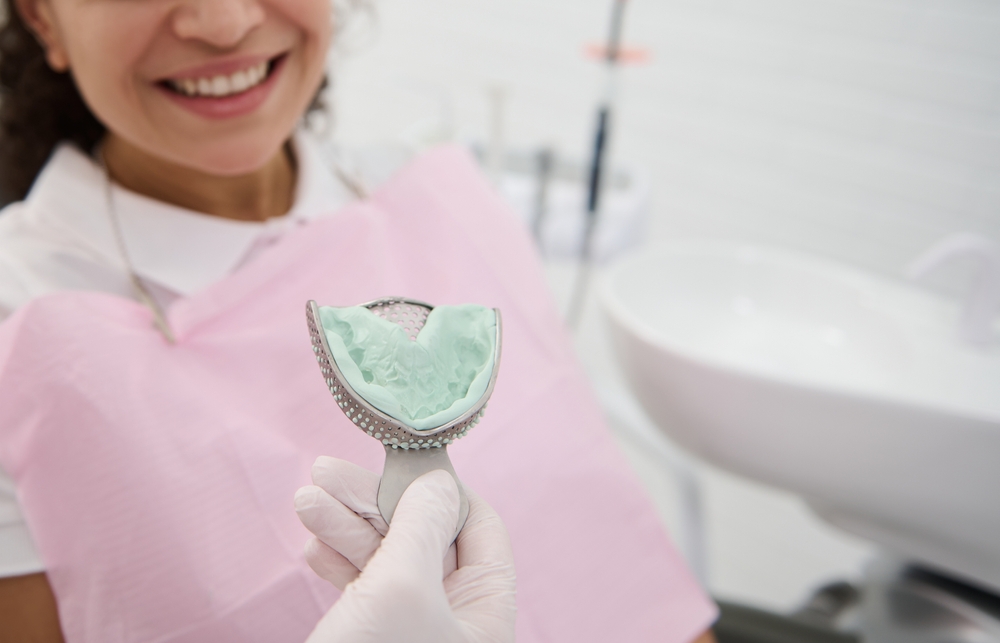
This tooth-colored composite material trades some long-term durability for lower cost and faster turnaround. It also offers an easier path to fixing dental decay later on.
How common is composite for onlays?
A retrospective cohort study of 469 patients found that onlays were the most commonly placed composite restoration. Onlays made up most restorations.
Composite is used regularly in real dental practice, not just in theory.
Composite vs. Ceramic: What the Research Shows
Researchers designed a clinical trial to compare the clinical efficacy of both materials, and the results are still developing. Long-term data for gold and porcelain simply doesn’t exist yet for composite at the same scale.
The Repair Advantage
Where composite pulls ahead is repairability; that same philosophy of treating a tooth conservatively runs through minimal preparation techniques. These techniques favor fixing only what’s damaged instead of removing sound tooth structure.
When dental decay damages a composite restoration, a dentist can often repair it in the mouth without removing the whole piece. Ceramic and gold usually can’t.
Composite is also the more affordable choice in most cases. It’s a realistic starting point before considering broader procedures like full mouth restoration when several teeth need attention.
Composite at a glance:
- Most affordable of the three materials
- Repairable chairside instead of requiring full replacement
- Most common choice for onlay-style tooth restoration
- Long-term survival data still developing compared to gold and porcelain
- Well suited for patients prioritizing cost and convenience over decades-long durability
Ready to choose your dental inlays and onlays? Let’s Talk!
After comparing the research, there is no single best material for dental inlays and onlays, only the one that fits your tooth, your budget, and how visible that tooth is when you smile. Gold rewards patients willing to trade appearance for maximum durability.
Porcelain and composite each solve for a different mix of looks, cost, and long-term care. A university dental school guide confirms that dentists will always discuss the options available to you before deciding.
Dr. Kathy Sanders and Dr. Erika Lovett at Tri-Cities Center for Cosmetic Dentistry can examine your specific tooth and walk you through which option makes the most sense, instead of guessing from a chart. Get in touch with us to find the right fit before you commit to any restoration.
FAQs
What is the difference between an inlay and an onlay?
An inlay fits inside the natural grooves of a tooth, addressing decay that sits between the cusps without touching the outer edges. An onlay goes further, covering one or more cusps when a fracture or larger cavity weakens the tooth structurally. Your dentist decides between the two based on how much healthy tooth remains after removing the damage, not personal preference.
How long do inlays and onlays typically last?
Material plays a role, but daily habits matter just as much. A restoration on a back molar handling heavy chewing forces wears differently than one on a lightly used tooth. Sticking to a solid oral hygiene routine and attending regular dental cleaning visits helps any material reach its full potential lifespan. Ask your dentist what to expect for your specific case.
Are inlays and onlays better than fillings for damaged teeth?
For small cavities, a standard filling is often quicker and more affordable, so your dentist may recommend it first. Once decay or a fracture affects more of the biting surface, an inlay or onlay distributes chewing pressure more evenly and resists wear better over time. The extra lab step means a slightly higher cost, but many patients find the added durability worth it long term.
How do I care for an inlay or onlay after my dental appointment?
Right after placement, mild sensitivity to hot or cold is normal and usually fades within a few days. Chew on the opposite side of your mouth for the first day while the bonding fully sets. If your bite feels slightly off or uneven, call your dentist so they can make a quick adjustment rather than waiting it out on your own.
Can a composite inlay or onlay be repaired if it gets damaged?
Small chips or minor wear on a composite restoration can often be smoothed and patched in a single visit without numbing or a new mold. Larger cracks that reach the underlying tooth usually call for full replacement instead, since a patch alone won’t hold up under normal chewing. Your dentist checks the extent of the damage before recommending either option.
Citation/Sources
- https://pmc.ncbi.nlm.nih.gov/articles/PMC11991908/
- https://www.ncbi.nlm.nih.gov/pmc/articles/PMC11068672/
- https://pmc.ncbi.nlm.nih.gov/articles/PMC3666490/
- https://pmc.ncbi.nlm.nih.gov/articles/PMC8746030/
- https://pmc.ncbi.nlm.nih.gov/articles/PMC3846627/
- https://www.bristol.ac.uk/media-library/sites/dental/patient-leaflets/inlays-and-onlays-patient-information.pdf