

Dental inlay costs can vary widely from one dental office to the next. Two patients with the same damaged tooth can visit different offices and walk out with quotes hundreds of dollars apart. That gap is not random. Four factors drive the difference, and each one changes the number in a specific way. Understanding them helps you make sense of any quote you receive. It also helps you ask better questions at your consultation. This guide breaks down each factor so you know what you are paying for before you sit in the chair.
Key Takeaways
- Fabrication method, chairside milling versus an outside lab, creates two different cost structures from the start.
- Material choice sets a price floor for your restoration before you add anything else.
- Coverage scope, inlay versus onlay versus overlay, changes how much material and chair time your tooth needs.
- Preparatory work like old fillings, decay, or gum disease adds separate costs before the inlay begins.
- All four factors combine on your specific tooth, so no generic quote applies to your case.

Factor 1: How the Fabrication Method at Your Dental Practice Shapes the Price
The dental practice you choose can use one of two fabrication methods. This choice creates two different cost structures from the start. Many offices use in-house CAD/CAM restorations, letting them design, mill, and place a restoration in one visit. Others still rely on an outside lab.
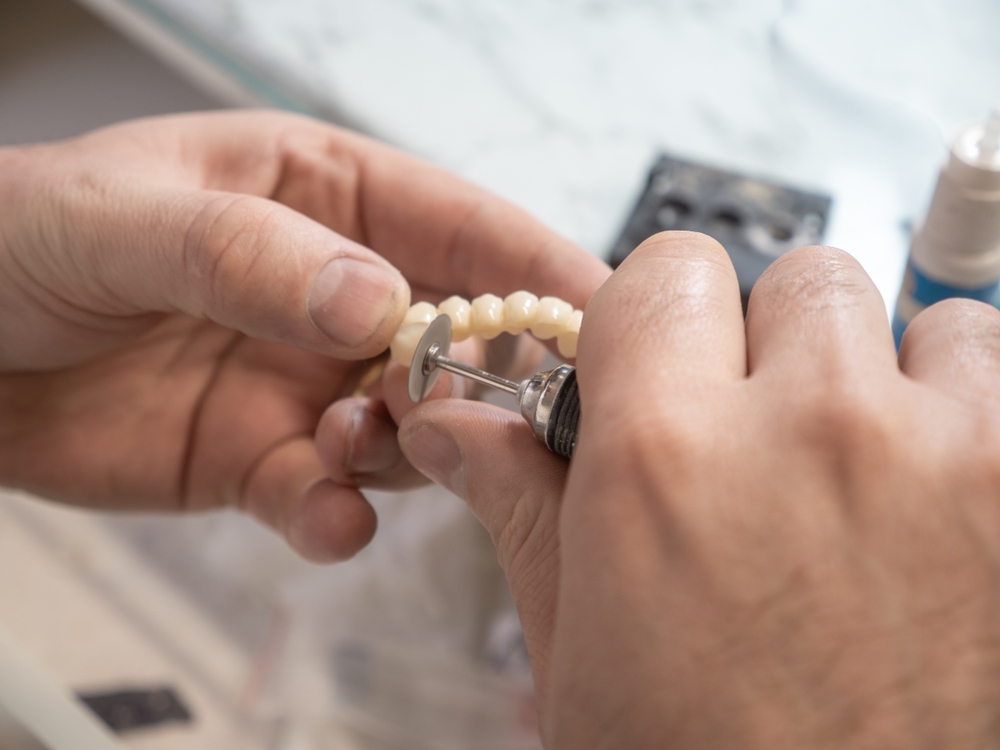
Some practices handle everything in-house. A digital scan captures your tooth’s shape. A computer designs the restoration, and a milling machine carves it from a ceramic block. You leave the same day with the finished piece already in place: no lab fee, no temporary restoration, and no return appointment.
Other practices send your case to an outside lab instead. After your tooth is prepared, the office takes an impression and ships it out. A temporary restoration protects your tooth while the lab builds your permanent inlay. That process usually takes one to two weeks, and a second visit follows for placement. This workflow adds a lab fee that varies by lab and material. Advances in ceramic materials and fabrication techniques mean that fees can vary between labs.
Chairside vs. Lab-Made: A Quick Comparison
Here is how the two methods stack up side by side:
- Chairside: one visit, no lab fee, no temporary restoration, restoration placed the same day.
- Lab-made: two visits, an added lab fee, and a temporary restoration worn for one to two weeks.
- Chairside pricing reflects the practice’s equipment and technology investment.
- Lab-made pricing reflects lab costs, material, and shipping turnaround.
Does Chairside milling always cost less?
Not always. Skipping the lab fee does not guarantee a lower total bill. A practice’s equipment costs may already be included in its procedure fee. Some lab-based offices charge lower base fees that offset the added lab cost. What matters most is comparing quotes within the same workflow type, not a chairside quote against a lab-based one.
Tooth preparation adds cost in either workflow. Any tooth reduction needed to seat the inlay properly adds chair time. That time gets built into the fee before fabrication even starts. Ask your dental team which workflow they use, since it affects your price and your timeline.
Factor 2: Dental Inlays and Onlays: How Material Choice Affects What You Pay
Dental inlays and onlays come in several different materials. Your dentist’s material recommendation is one of the strongest drivers of your final price. The market is overflowing with biomaterials for these restorations, which makes the choice more complex than it used to be.
Common Inlay and Onlay Materials, From Least to Most Expensive
Here is a general look at how materials compare, from the most affordable to the most premium options:
- Acrylic and composite resin: the most affordable option, often used for smaller restorations.
- Feldspathic ceramic: closely matches the look of natural enamel.
- Lithium disilicate: balances strength with good color matching and a natural shape.
- Zirconia: the hardest option, holds up well in high-pressure areas like the back molars.
- Hybrid ceramics land in the middle on both properties and cost, blending ceramics, composites, and hybrid materials into one restoration.
The material block itself carries a cost that passes straight through to your bill. A zirconia block costs more than an acrylic one. Material choice sets a price floor before any other factor gets added.
Material Selection Is a Clinical Judgment, Not Just a Cost Choice
Choosing a material involves more than budget. Stiffer ceramics resist wear but can fracture under heavy bite pressure. Softer composite resin flexes more, shifting fracture risk to the tooth underneath. A durable result depends on material selection, manufacturing technique, and restoration design working together. Your dentist matches the material to your tooth’s condition instead of picking based on price alone.
Patients sometimes ask if dental fillings and inlays are priced the same way. They are not. A filling is soft material placed and hardened directly in the tooth. An inlay is a solid unit made outside the tooth and bonded into place. That extra fabrication step, whether done chairside or in a lab, explains most of the difference in tooth restoration cost.
Factor 3: Coverage Scope: How Much of the Tooth Affects What You Pay
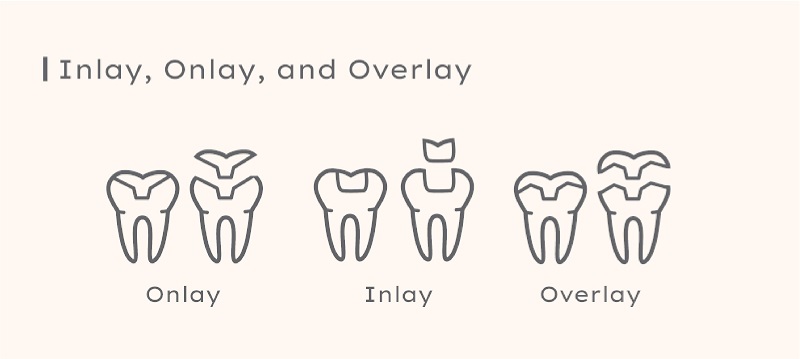
Coverage scope is the third variable in your final price. A standard inlay fits within the cusps, without touching their outer edges. An onlay extends further, covering one or more cusps for extra support. Dentists often choose an onlay specifically because it can provide cusp coverage to reinforce posterior teeth at risk of fracture. An overlay goes further, covering most of the tooth’s biting surface.
Inlay vs. Onlay vs. Overlay: What Changes With Each Option
The differences come down to how much of the tooth surface each restoration replaces:
- Inlay: fits between the cusps, used for smaller areas of decay or damage.
- Onlay: covers one or more cusps, used when more of the tooth needs support.
- Overlay: covers most of the biting surface, used for more extensive damage.
- More coverage means more material, more design time, and more chair time.
This is why two patients with the same material can still get different quotes. One tooth might only need a small inlay between two cusps. Another might need a full onlay after a large section of decay is removed. The size of the damaged area, not just the material, decides how much of the tooth needs to be covered. Ask your dentist to explain why an inlay, onlay, or overlay fits your specific case.
Factor 4: Tooth Decay, Gum Health, and Other Preparatory Work That Adds to the Bill
Tooth decay is the most common reason patients need an inlay. That said, its presence doesn’t mean the inlay is the first item billed. Untreated decay is common nationally, since dental cavities that have not received appropriate treatment affect a meaningful share of adults. Before placement can begin, your tooth must be in a condition that will support a stable restoration.
What Has to Happen Before Your Inlay Goes In
A few things typically need to happen first, and each one is billed as its own step:
- Removing old restorations and treating any decay found underneath.
- Evaluating any cracks to see how far they run before deciding if an inlay is still the right fix.
- Treating gum disease, also known as periodontal disease, so that the gum tissue can support the restoration.
- Completing a root canal first, if decay has reached the nerve of the tooth.
Gum disease has to be brought under control before restorative work starts. If your dental team finds it during your exam, treating it becomes a separate line item that adds to your total.
How Root Canal Treatment Fits Into the Picture
If decay or damage reaches the tooth’s pulp, a root canal comes first. Root canal treatment is its own dental procedure with its own separate fee. It has to be finished before tooth preparation for the inlay can begin.
Your dental health history also affects how much prep work is needed. A tooth that has never been restored may need very little beyond standard reduction for the inlay seat. A tooth with old fillings or a history of structural damage may need several steps before it is ready.
Dental hygiene also plays a long-term role. Patients who keep up with regular hygiene visits tend to have less secondary decay and fewer complications later on. Fewer complications mean fewer preparatory steps and fewer line items on your final bill.
When an Inlay Isn’t Enough: Other Restorative Options
Sometimes a tooth is too damaged for an inlay to be the right fix. In those cases, your dentist may discuss other paths to tooth replacement:
- Tooth extractions, when the tooth cannot be saved and needs to come out.
- A partial denture or full dentures, for replacing one or several missing teeth.
- Dental implants, which may need bone grafting if there isn’t enough bone at the implant site.
- An orthodontic solution, when tooth position is part of the underlying problem.
Waiting too long after a tooth is lost can affect bone loss, tissue quality, and jawbone density. All of that matters if you consider an implant later. Bringing this up early keeps your options open.
Dental Insurance and Getting an Accurate Cost Estimate
Dental insurance plans vary in how they cover inlays, onlays, and the preparatory work described above. Some plans treat inlays similarly to fillings. Others treat them more like crowns. A written cost estimate from your dental practice is the only way to know what you will owe. That estimate should reflect your specific treatment plan.
Find Out What Your Dental Inlay Cost Really Includes
Dental inlay cost isn’t a fixed number you can borrow from someone else’s treatment plan. The fabrication method, material, coverage, and condition of your tooth all shape your final bill in different ways. A quote that fits your neighbor’s tooth may not fit yours.
The only way to get a number you can trust is a hands-on look at your specific tooth from dental professionals like Dr. Kathy Sanders and Dr. Erika Lovett. Ready for real answers instead of guesswork? Contact Tri-Cities Center for Cosmetic Dentistry to learn exactly what your treatment involves.
FAQs
What is the difference between an inlay and a filling?
A filling is placed directly into the tooth and hardens in place, while an inlay is custom-made outside the mouth and then bonded in as a solid piece. Dentists usually recommend an inlay when the damaged area spans multiple points on the chewing surface, or the remaining tooth structure needs extra support. This added strength is one reason inlays often outperform large fillings over time.
How long do dental inlays typically last?
Many inlays last a decade or longer, and some go beyond twenty years with consistent care. Grinding your teeth at night, biting into very hard foods, or skipping regular hygiene visits can shorten that lifespan considerably. Because the restoration is bonded rather than mechanically wedged in place, a well-fitted inlay tends to hold up better than a large filling in the same location.
Is getting a dental inlay painful?
Local anesthesia numbs the area before your dentist removes any decay or old material, so the procedure itself shouldn’t hurt. Most people describe mild sensitivity to hot or cold for a few days afterward as the tooth adjusts. If you feel anxious about dental visits, ask your team about sedation options before your appointment. Discomfort that lasts beyond a week is worth a follow-up call.
Can a dental inlay be replaced if it wears out?
Yes, a worn or damaged inlay can be removed and replaced with a new one. Your dentist checks the health of the tooth underneath before deciding whether a simple replacement is enough or if the area needs additional treatment first. Replacement often follows the same fabrication process as the original, whether that means a same-day chairside restoration or a lab-made piece. Replacement costs are usually similar to the original.
What happens during the tooth preparation step for an inlay?
Your dentist first removes decay or old material, then shapes the remaining tooth to create a stable, well-defined seat for the restoration. Depending on the office, either a digital scanner or a traditional impression captures the exact shape for fabrication. A temporary restoration may be placed if you’re waiting on a lab-made inlay. The whole preparation appointment usually takes under an hour for most teeth.
Citation/Sources
- https://pmc.ncbi.nlm.nih.gov/articles/PMC5741454/
- https://pmc.ncbi.nlm.nih.gov/articles/PMC3010023/
- https://pmc.ncbi.nlm.nih.gov/articles/PMC11856138/
- https://pmc.ncbi.nlm.nih.gov/articles/PMC8037100/
- https://pmc.ncbi.nlm.nih.gov/articles/PMC5657342/
- https://onlinelibrary.wiley.com/doi/10.1111/jerd.13114
- https://www.cdc.gov/nchs/products/databriefs/db197.htm