
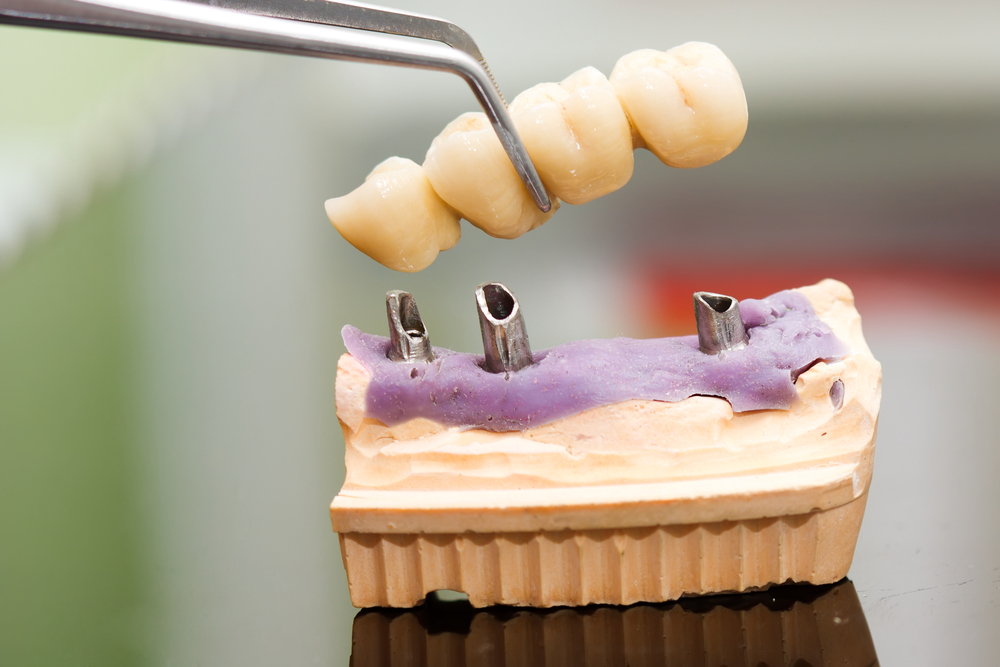
Whether you’re replacing one tooth or several, the connector piece between the implant post and the crown is called an implant abutment. The component looks similar in both cases, but the placement rules are not. Add a second implant to the picture, and a new requirement appears that never applies to a single crown. That one requirement changes how a bridge case gets planned from day one.
Key Takeaways
- A single crown’s abutment only answers to one implant, so your dentist has room to correct for angle.
- A bridge’s abutments must share one common insertion path since the whole prosthesis seats at once.
- Engaging abutments work best when implants sit naturally parallel.
- Non-engaging abutments create flexibility when implants aren’t perfectly aligned.
- Bone health and implant angle affect bridge cases more than single-crown cases, since the stress adds up across every site.
The One Key Difference: Why a Bridge Needs a Shared Path a Single Crown Never Does
A single implant crown answers to one implant only. Its abutment only needs to match the angle and position of that one post, giving your dentist real flexibility to correct almost any imperfection on the spot.
A dental bridge works differently because it’s one connected structure. It must seat over every abutment in the span at the same time and move in the same direction.
That’s why every abutment needs to follow one shared path of insertion, a requirement single crowns never face. When one abutment strays from that path, the misfit can create uncontrolled strains in the prosthetic components and surrounding bone.
What This Means for Your Treatment Plan
That one distinction drives nearly every decision in a bridge case:
- Which type of abutment gets used at each implant site
- How much angle correction each implant can safely absorb
- How many appointments and lab steps the case will need
- How the entire span gets mapped out before treatment starts
What a Dental Abutment Does and How It Attaches to the Titanium Post

Dental implants replace natural teeth in two parts. A titanium implant post goes into the jawbone and acts as the root, while the visible crown sits on top. These two parts don’t connect directly. The abutment sits between them and connects the pieces.
The Three-Part Connection
Every implant restoration relies on the same basic chain:
- The titanium post fuses with the jawbone below the gumline.
- The abutment threads onto the top of the post using a small screw.
- The crown attaches to the abutment, completing the visible restoration.
That tight connection keeps the restoration stable under the pressure of daily chewing.
For a single-tooth replacement, the process is fairly straightforward. Your dentist takes impressions or a digital scan and designs a custom dental crown. They also select an abutment suited to your implant’s exact angle.
That angle matters because implant posts don’t always go in perfectly straight. Bone shape, density, and nearby teeth all affect where the post lands.
Does the angle of a single implant’s abutment screw matter?
For a single crown, an off-angle post is manageable. Your dentist can adjust the abutment screw to redirect the crown into the right position.
Research on rescue cases confirms that clinicians often work around manufacturers’ lack of angle-correcting abutments. They fabricate a custom solution when a single implant lands off-axis.
That correction stays local because there’s no second implant to coordinate with. That is why single-tooth cases usually involve fewer appointments and fewer component decisions than a bridge.
A dental laboratory that specializes in precise, one-off restorative work still fabricates custom abutments for these single-implant corrections.
How Engaging and Non-Engaging Abutments Solve the Bridge’s Shared-Path Problem
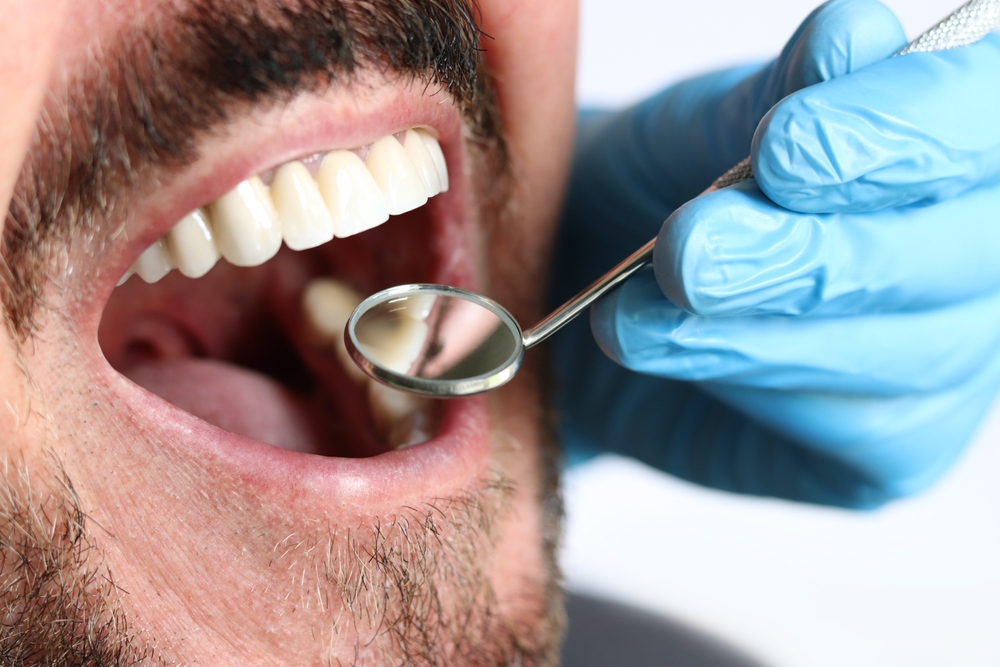
This often confuses patients who’ve had a single crown placed. Their bridge case suddenly involves far more planning and component decisions.
The abutment type chosen for each implant in the span solves the shared-path requirement.
Engaging Abutments: Best for Parallel Implants
Engaging abutments lock into the implant shape and hold a fixed rotational position. This works well when implants sit naturally parallel to one another.
They’re the more rigid, precise option, but that precision only helps if every implant in the span already lines up.
Non-Engaging Abutments: Built for Flexibility
When implants aren’t parallel, non-engaging abutments allow rotational freedom instead. Research on multi-unit restorations confirms that these abutments allow rotational freedom and facilitate passive fit. They accommodate slight angulation differences between implants.
That freedom lets the team rotate each abutment until they all point in the same direction. This creates one shared path across the entire span.
A tooth-supported bridge works differently. The adjacent teeth get shaped during preparation, so the dentist controls the angle directly.
With implant-supported bridges, the implants are already fixed in bone. They can’t be reshaped, so the abutments must do that work instead.
That is why the restorative team chooses customized abutments as a system across the full arch. They don’t select them individually.
The team designs each abutment position in relation to the others. This creates one continuous path the bridge can follow from end to end without interference.
How Bone Loss, Gum Disease, and Incorrect Angle Affect the Well-Placed Implant Requirement
The shared-path requirement affects more than which abutments the team chooses. It also changes how much the initial implant position matters.
For a single crown, a slightly off-angle post is correctable. The abutment absorbs it, the bone around that one implant handles the added stress, and the result still functions well.
Finite element analysis research confirms that angling an abutment increases stress in surrounding bone compared to straight configurations. For one implant, that trade-off is usually acceptable.
What Affects Implant Angle and Bone Health
Several factors influence how much correction an implant needs before it’s even restored:
- Natural bone shape and density at the site
- How long ago the tooth was lost
- Position of neighboring or abutment teeth
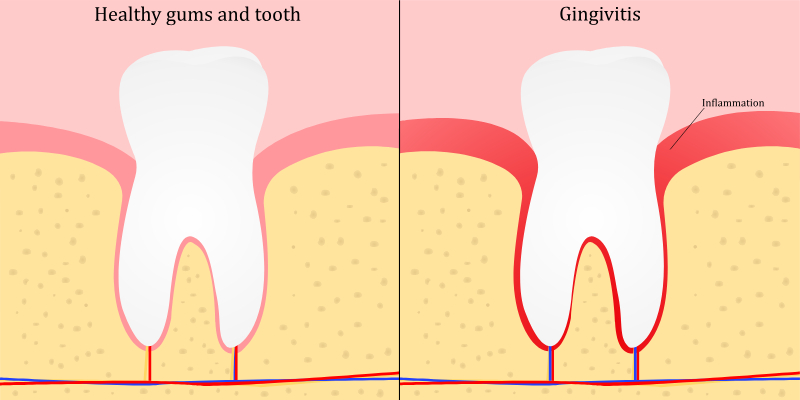
- Presence of active or past gum disease
- The connection interface chosen between post and abutment
Why Consistent Bone Health Matters More for Bridges
For a bridge, the same stress increase applies at every abutment position that needs a correction. Across two, three, or four implants, that load adds up fast.
A well-placed implant reduces the correction burden on each abutment. An incorrect angle at any position forces a larger correction and raises stress at that site.
The connection interface between post and abutment adds another variable. Dentists often group interfaces by whether the implant and abutment line up at the same width or step down slightly. This design difference is called platform switching.
A systematic review on abutment connection design found that platform-switched designs had significantly lower bone loss scores than PM-connection. This confirms that interface choice measurably affects how much bone changes around an implant over time.
For a bridge, that decision must stay consistent across every position in the span. Inconsistency can create uneven stress and affect how bone responds at each site.
Bone loss and bone density matter for a specific reason. Tooth loss causes the jaw to resorb bone in that area, and gum disease speeds up that process.
A patient with significant bone loss before implant placement may lack enough volume to support the post correctly. That shortfall requires a larger correction and increases stress.
Good dental hygiene before and after placement slows bone loss and helps the tissue around each abutment stay healthy. In a bridge case, tissue health matters at every implant site, not just one.
Get Expert Guidance on Your Implant Abutment for Long-Term Success
Your implant abutment choice shapes how a restoration performs, whether you need one crown or a full bridge. If you’re weighing your options, the right abutment strategy can mean the difference between guesswork and a plan built around your bone health and bite.
You don’t have to figure this out alone. If something about your current treatment plan doesn’t feel right, getting a second opinion is a reasonable step. National dental health guidance recommends you contact your state or local dental organization when weighing your options.
At Tri-Cities Center for Cosmetic Dentistry, Dr. Kathy Sanders and Dr. Erika Lovett will walk you through every abutment and bridge planning decision so nothing is left to guesswork. Contact us to schedule your consultation and find out what your case actually needs.
FAQs
What does a dental implant abutment look like?
An abutment is a small connector piece that sits just above the gumline, between the implant post below and the crown above. It’s typically narrower at the base and widens slightly near the top to support the crown’s shape. Dentists often use titanium for strength or zirconia for a more tooth-colored look in visible areas. Once your final crown is in place, the abutment stays completely hidden from view.
How long after the abutment is placed is the crown attached?
Most patients wait two to six weeks between abutment placement and receiving their permanent crown, though timing depends on how quickly the surrounding gum tissue heals. Your dentist may fit you with a temporary crown in the interim, so you’re never left without a functional tooth. Cases involving bone grafting or extra healing time may extend this window. Your treatment team will confirm an exact timeline at your abutment appointment.
Does placing the abutment hurt?
Local anesthesia numbs the area completely, so you shouldn’t feel pain while your dentist places the abutment. Afterward, mild soreness or slight swelling around the gum is common and typically fades within a few days. Over-the-counter pain relievers and a soft-food diet usually manage any discomfort well. Most patients describe this step as noticeably easier to recover from than the original implant surgery.
How does the abutment attach to the implant?
A small screw threads the abutment into the implant post, and your dentist tightens it to a precise specification to prevent loosening over time. Some restorations use cement to secure the crown onto the abutment instead of a screw, depending on the case. Regular checkups let your dentist confirm the connection stays tight. A properly secured abutment connection supports long-term implant stability and reduces the risk of complications.
How much does an implant abutment cost?
Abutment costs vary based on material, whether it’s a stock or custom design, and the overall complexity of your case. Many practices include the abutment in the total implant restoration fee rather than billing it separately. Dental insurance may cover part of the cost, especially when bundled with a covered implant procedure. Ask your dental team for a personalized estimate during your consultation.
Citation/Sources
- https://pubmed.ncbi.nlm.nih.gov/28944373/
- https://pmc.ncbi.nlm.nih.gov/articles/PMC10784758/
- https://pmc.ncbi.nlm.nih.gov/articles/PMC10829709/
- https://pmc.ncbi.nlm.nih.gov/articles/PMC12798370/
- https://pmc.ncbi.nlm.nih.gov/articles/PMC9440824/
- https://pmc.ncbi.nlm.nih.gov/articles/PMC8638280/
- https://www.nidcr.nih.gov/health-info/finding-dental-care